


About the Series: In this 7-week series, I will review and analyze films specially curated for the theme “Women on the Verge (Of a Nervous Breakdown).” Enjoy analyses and thoughts on our cinematic favorites, underrated gems, and discover what makes the featured women protagonists, “On the Verge.”
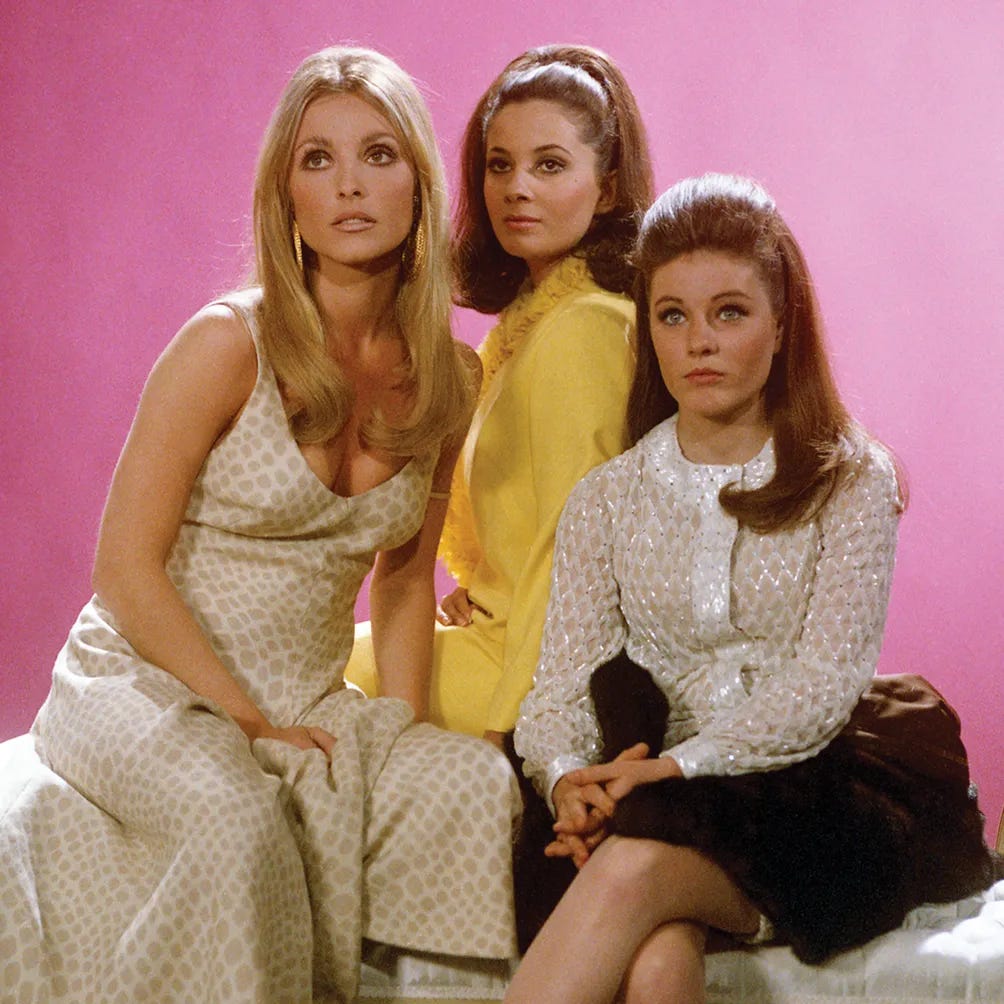
Love it or hate it, Valley of the Dolls became a salacious and sensational pop culture phenomenon in 1967. Adapted from the 1966 novel of the same name written by Jacqueline Susann, and directed by Mark Robson, this film remains controversial and bleak. A peek into the life and customs of the late-60s American woman, the three protagonists face the uncertainty and destruction that their irregular personal lives bring.
Anchored by Anne Welles (Barbara Parkins), the film follows the doe-eyed and innocent brunette as she leaves her sleepy New England town to follow dreams that can only be made in New York City. She quickly lands a job as a secretary for a high-powered Broadway agent and eventually rises to stardom as a successful model. On her rise to fame, she befriends Neely O’Hara (Patty Duke) and Jennifer North (Sharon Tate). Facing a series of romantic, professional, and personal challenges, all three women are pushed to the brink of insanity, relying on “dolls” or prescription pills to ease their pain. The film leaves audiences without a happy ending, with Jen, whose character was inspired by Marilyn Monroe, succumbing to death, Neely, an obvious stand-in for Judy Garland, facing full-blown addiction, and Anne, based on the novelist Jacqueline Susann herself, returning home to New England, leaving all her trauma behind in New York City.
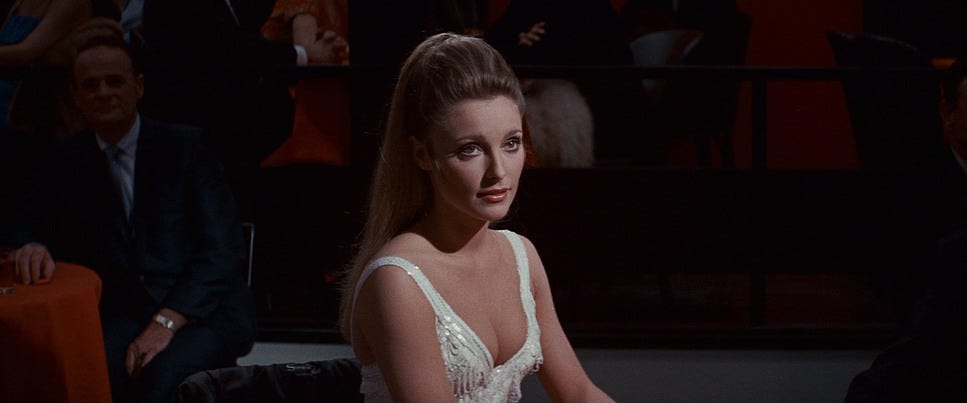
All three women push their professional and personal boundaries in standout ways. Jen, a talentless chorus girl, leans exclusively on her physical beauty to feed her self-worth. Attractiveness is her best currency, and nothing can deter the slack-jawed, drooling men from fawning over her. They feed on her beauty, sucking her soul like a mosquito. Jen uses her currency to send money to her critical and tyrannical mother. While on the phone, audiences get a slap in the face when Jen says, “Mother, I know I don’t have talent. I know all I have is a body. Yes, I am doing my chest exercises.” Rough. The irony is not lost on audiences that her mother will berate Jen and then turn around and accept income from the sweat of her daughter’s flawless brow. Jen plays her role. When her husband, Tony, is stricken with a disease that incapacitates him, Jennifer, left to fend for herself, must now exploit herself by starring in “art films” (wink-wink nudge-nudge, “art films” really means soft-core porn) in Paris.
Jen’s Verge is intense and compelling. Stepping outside of herself, she betrays her morals by revealing her body for money. Though she was forced to pivot from her preferred acting style, she agreed to follow through with these “art films.” Choosing to move to Paris to star in these films is an act of rebellion and can be considered a reclamation of her body through her own means. Jen’s character reaches a tragic and upsetting end when she swallows a bottle of “dolls,” lies on the bed, and closes her eyes. Jen’s last scene in this film is the best acting Sharon Tate does throughout the entire runtime. As Jen lies on the bed, through a series of dissolves and montages, the line between Jen and Sharon Tate begins to blur, in the most haunting aspect of all.
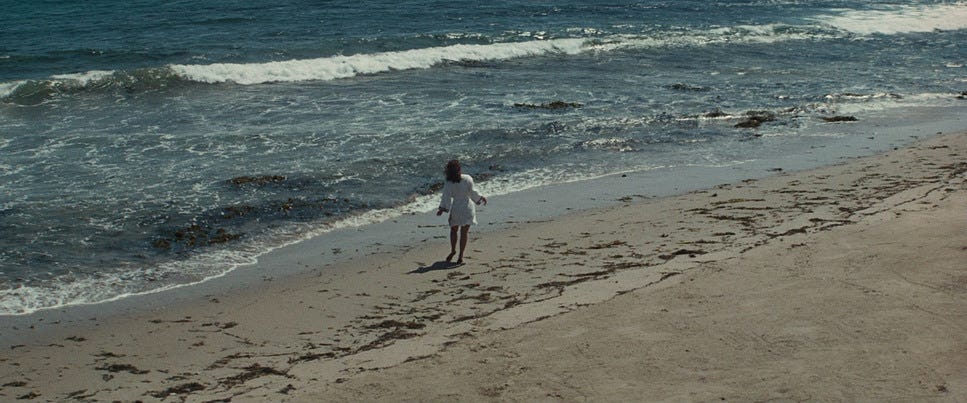
Anne anchors this film, starting and ending with her in New England. After her rise to fame, she treks from New York to Los Angeles. Falling for Lyon Burke, another agent in her office, her unfortunate soire with “dolls” knocks on her door when Lyon refuses to marry her. He breaks her heart and drives her to the pitfalls of addiction. She is the last of the protagonists to reach for the bottle and receives a mostly pleasant but unfulfilling end.
Based on my definition of “Woman on the Verge,” Anne does not necessarily break traditional gender norms or boundaries. Her Verge and Breakdown is nonexistent, acting as an example of the 60’s “good girl” who endures the rules. She reads the playbook and follows it. Trading her fast-paced life for the quaint small town she originally left behind, this exemplifies regression and a lack of character development, taking the easy way out.
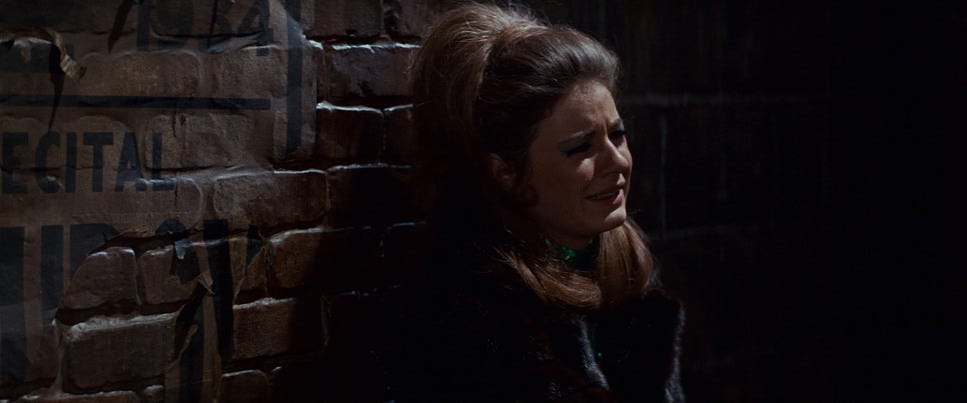
Now, wildcard Neely O’Hara. After being fired from her Broadway play by her egotistical co-star, Helen Lawson, Neely is consoled by her husband, Mel. Mel grows concerned, believing Neely desires a successful career more than him. Yawn. Neely’s Verge is apparent when she proves Mel’s concerns true and throws her all into becoming a star. Based on Judy Garland, she falls into the cycle of addiction, using alcohol to soothe her nerves, taking uppers to wake her up, and downers to put her to sleep. Though erratic and destructive, Neely busts her preconceived womanly mold, declaring, “When a man says he won’t do a lousy scene, that’s called integrity. When a woman says it, she’s temperamental.” Neely’s character dabbled with feminist consciousness before she fell into her all-encompassing Breakdown. Coming to a vexing end, her character crumbles under solitude. Without her dolls or fame or fortune, she has nothing, not even herself.
While the film is known for its campy demeanor, I cannot move past the reality that every single woman in this film’s addiction hinges on the disappointment, rejection, or change in life due to a man. Jen’s husband Tony’s diagnosis leads her to art films, which leads her to addiction, which leads her to death. Without her husband, porn and death were her best options. Anne’s unrequited love for Lyon causes her to be rejected time and time again, leading to her dabbling with pills. Lastly, Neely’s addiction feels like punishment for not fulfilling her feminine duties and leaning solely on her husband, Mel, during her time of need. Even when Mel falls into an affair, the audience is swayed to agree with Mel’s decision, feeling unsympathetic towards Neely. She is on drugs after all, leaving her husband to his own devices. Punished just for being, why must the audience watch these women suffer so?
As a film, Valley of the Dolls is a grim, dark fable. It tells us that power corrupts even the sweetest soul. Dreams are destroyed, and the city is no longer a refuge. “Get in where you fit in” has little to no meaning, as in order to fit in, one must change the fundamentals of who they are or betray their sense of self-worth. Valley of the Dolls is set in a world where the 26-year-old film star can be replaced by a younger, more attractive woman. In 2026, the film holds a mirror to our contemporary society.
Moving at a painfully leisurely pace and boasting silly dialogue, this film has gained a reputation as one of the “worst” films in history. That is a bit of a reach; however, the soapy, melodramatic nature paired with outdated language makes the film unpalatable to modern audiences. However, it upholds a substantial cultural win by being the reason for John Williams’ first-ever Oscar nomination. A bit ridiculous at times, this film stands as a time capsule and sociological study of women’s mental and emotional states during the late 1960s. They endure, they suffer, and hopefully, as their daughters, we, the audience, find a way to flip their pain and expose the complex, true side of womanhood.
VALLEY OF THE DOLLS is one of my faves. Love the movie. Love the novel. I also loved the very bad movie about the novel, ISN’T SHE GREAT. Anything Jackie Susann is good in my book! Your essay makes me want to watch the movie again.