


About the Series: Blaxploitation and the Cities That Make Us is a 6-week analytical series exploring the relationship between Blaxploitation protagonists and the communities that shape them. Whether Los Angeles, Harlem, Oakland, or Detroit, these cities are living organisms that influence each protagonist’s identity. Through historical, cultural, and film analyses, this series examines how each project reflects the neighborhoods, struggles, and communities that gave rise to some of Black cinema’s most adored heroes.
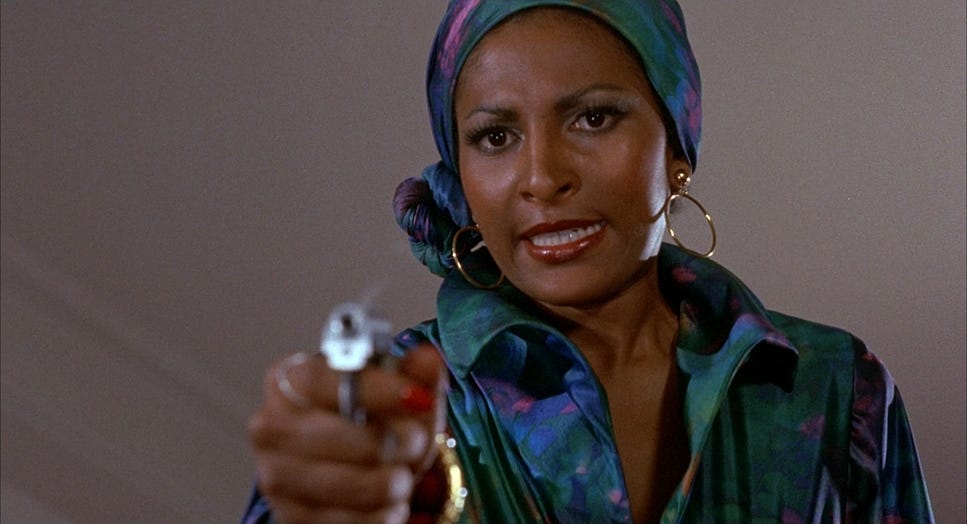
Foxy Brown marks the evolution of Blaxploitation from campy action to iconic heroism. In the titular role, Pam Grier establishes the archetype of the Black woman action lead. She forges her own path, constructs her own world, and compels viewers to engage with it. Foxy Brown serves as a dynamic reminder of the essence of Blaxploitation: the strength derived from communal solidarity. The film reinforces this idea, demonstrating that collective support empowers communities. With Foxy Brown as the charismatic leader of her Los Angeles neighborhood, the community unites to defend their right to live freely and peacefully. Reflecting on this series, I note that Blaxploitation’s significance extends beyond action sequences and flamboyant narratives. At the crux of the movement, Blaxploitation highlights the significance of the Black community upholding its principles and showcases the potential of unity.
As a sister film to Coffy (1973), Foxy Brown establishes the template for the female action hero within the genre. Pam Grier’s portrayal is marked by wit, determination, charisma, and confidence, making her the film’s standout. The narrative follows Foxy Brown’s pursuit of justice for her boyfriend, who was murdered by Katherine (Kathryn Loder), the leader of a local prostitution ring. To avenge his death, Foxy goes undercover as a sex worker to dismantle the criminal operation. Her intelligence and resourcefulness support her in navigating perilous situations effectively. However, the “exploitation” aspect of Blaxploitation is evident, as Foxy Brown also engages with elements of “sexploitation.” The film frequently displays gratuitous images of topless women, including Grier herself. As a modern viewer, I found the objectification of women’s bodies unsettling and on par with the broader trend within the genre, with the featured women seen only for their physical attributes rather than their personalities or histories. This pattern reflects both the conventions of Blaxploitation and the cultural context of the 1970s.
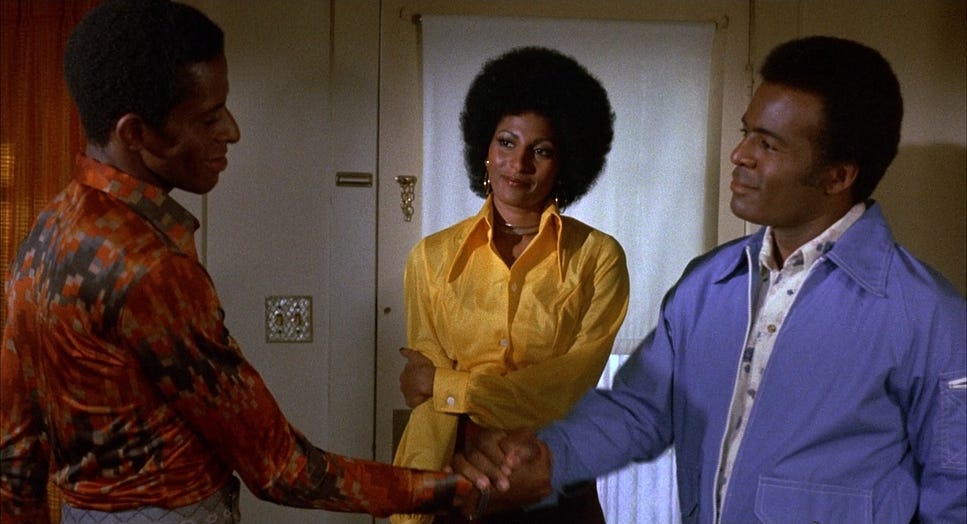
Foxy Brown’s impact on Blaxploitation as a genre cannot be overstated. Pam Grier is considered the godmother of the Black woman action hero for her willingness to commit to the character and expand previous cultural implications. Going above and beyond, her performance is undeniably powerful for its audiences. Black women yearned to witness representation of women like themselves on screen. Women who work, women in charge, women with power. Additionally, Foxy spoke for the women who could not, women who were suppressed. Women who ached to free themselves from underneath the thumb of their oppressors. Foxy acted as a role model and was the beating heart of 1974.
Foxy’s rebellious spirit fits in with the essence of Los Angeles, 1974. With a changing political landscape and socio-cultural issues ever-present, Los Angeles served as the backdrop for Foxy to enact her vengeance, thereby staking a claim to her self-worth and dignity. She empowered those around her to work as one unit for a common purpose. After hitting her lowest point, captured and desecrated by two redneck lowlifes, Foxy must regain her composure to take down Katherine. She realizes that she alone cannot do so. She calls in backup. Her neighborhood and community follow her into the battleground, fearlessly concocting a plan to lure Katherine’s goons into their clutches. Moving as one, they execute them swiftly, leaving Foxy to handle Katherine herself. This act of community engagement is the crux and lesson of the Black American legacy. Together, we are stronger in numbers against the establishment.
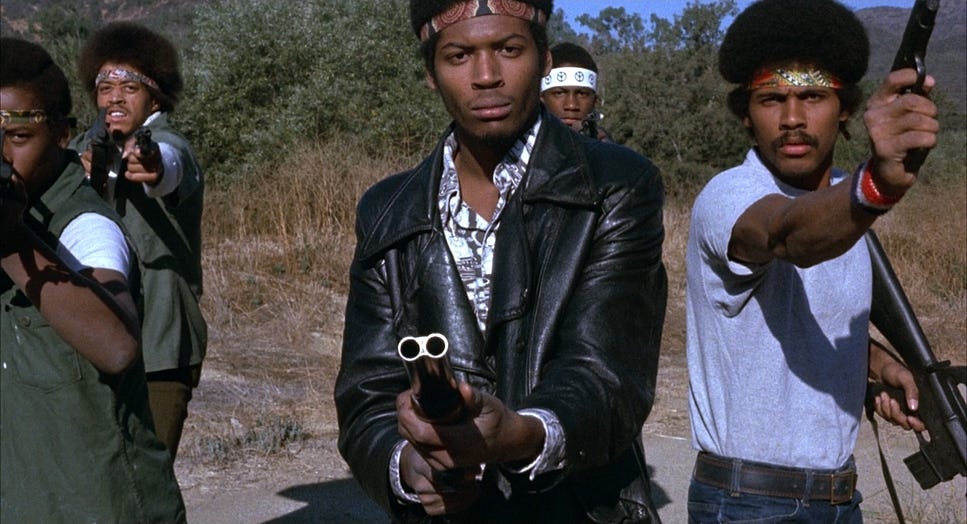
Regardless of one’s perspective, the success of Blaxploitation films demonstrates the outcomes when Black creativity intersects with newfound opportunity. Although these films were often produced and directed by white corporations, Black artists generated their own narratives, vehicles, and products to envision alternative realities for their communities. Black audiences embraced these films, seeing familiar neighborhood faces on screen who challenged The Man and achieved justice. The emergence of films such as Foxy Brown, Coffy, Dolemite, Cotton Comes To Harlem, Cleopatra Jones, and Black Caesar illustrates the cultivation of community and the nurturing of cultural legends. Reflecting on my experience with this genre, I acknowledge the challenges of confronting racism, misogyny, and homophobia through a contemporary lens. However, situating myself within the historical context enabled me to appreciate these films as expressions of fantasy, aspiration, and possibility. The idealized worlds depicted invite us to imagine new potentials. I am grateful to Pam Grier and the other on-screen heroes for crafting spaces that invite exploration and reflection, even if only temporarily.